

Authentic story
Some years ago, my partners and I created an internet advertising network.
As pioneers, we generated the first revenue for medium publishers, who traditionally received a smaller share of advertising budgets that were mostly allocated to the top portals. Thus, the local internet advertising market was born.
Advertisers were happy, and niche websites with loyal audiences achieved results. Content targeting was booming, and digital marketing was in its seed stage.
I was eager to build something new that could make a difference. I considered myself fortunate to participate in this success story—the first and largest ad network in the Baltic States.
It succeeded indeed, as we sold our creation to a portal group at a good price, closing the round.
Market evolution
During that time, traditional networks lacked perspective in the face of Google’s automated advertising and auction-based bidding. Google’s dominance was solidified by its Ad Exchange platform, transforming ad networks into SSPs and programmatic vendors.
As the years passed, Google established standards in the advertising business through platforms like Ad Manager and YouTube. Despite this, specialized ad businesses continued to thrive, and publishers also received their piece of cake.
However, Facebook emerged as the social media king, dominating marketers’ strategies and driving up prices on major social platforms. As a result, today cold audiences from Meta are becoming increasingly less profitable for e-commerce marketers.
TikTok’s Reels often fail to engage cost-effectively, as they are overcrowded with A/B testing. Nevertheless, top influencers and their audiences are becoming akin to media channels with premium pricing.
Meanwhile, Google, with AI, is reshaping current SEO practices through Search Generative Experience. This poses challenges for marketers unless they are masters of copywriting for successful newsletters or creators of engaging web funnels.
What does the future of digital advertising look like for e-marketers who do not have their own audience?
The reality
These challenges became painfully apparent two years ago when I launched an online and physical product (a book) in a foreign market. I realized that social media advertising was prohibitively expensive, eating into my desired margin of 50%. Facebook failed to provide the niche audience I sought. Thus, operating a business at a break-even point isn’t truly a business, no matter how excellent your product may be.
Reaching the right audience is the real challenge, as demonstrated by my case study. Many marketing departments struggle with Return on Advertising Spend (ROAS) issues and are offsetting losses with reserves from advertising budgets. I consider myself a realist rather than a pessimist. However, your perception of reality may differ, depending on the stage of life you’re currently in.
Some may argue that high income depends on the product quality, while others may view it as a matter of philosophy.
The moment of truth can be perceived in two ways: as a moment of magic or a moment of misery.
From my observations and experiences, success often follows perseverance, even when it feels like time has stopped—especially considering Google Chrome’s ongoing ban on cookies, which will likely impact programmatic advertising, retargeting, and Data Management Platforms (DMPs). Consequently, first-party at websites data is poised to become more valuable.
Have you ever felt like you’ve come full circle after making progress? Perhaps marketers should reconsider simple content targeting at publishers, opting for direct integrations albeit in a different form.
Thus, I began exploring alternative solutions with my own resources to maintain my margin. I sought to establish closer relationships with traffic sources, offering them something more than just bold price lists for brand positioning. And thus, a marketing strategy was born.
Part 2
My idea was born accidentally, under certain circumstances. It was a moment of misery, as my online product hadn’t generated any profit, and I didn’t have a well-paid job. I’m not saying this to be sentimental. Despite these challenges, I was convinced that my marketing strategy had value.
I observed here in Lithuania a real success stories where small startups consistently grew into unicorns. What were the reasons? It’s always a mix, besides the innovative idea. It’s about finding a product that resonates with the masses, team perseverance, even with the 51st or 35th product, and technology reliability that just works.
Nevertheless, market evolution always starts with those who make a change. Examples include Amazon and Netflix, which revolutionized e-commerce and online subscriptions worldwide. Here in Vilnius, these giants were followed by companies like Nord Security, Vinted, and Kilo Health. One of the reasons that really made a change is the magic of AFFILIATE.
Why magic?
Just imagine yourself as a publisher.
The advertiser, as the business owner, shares up to 40% of its income (sometimes even 100% for new sign-ups) with you, which I call aggressive commissions. Publishers and influencers engage the audience for purchases, working with the brand on the same side.
It’s not like knocking on media’s doors and negotiating the price, as let’s be honest, that reality does not exist anymore for growth hacking. Instead, marketers offer you participation in their revenues to become partners.
Nevertheless, marketers benefit from affiliate traffic by acquiring a bold audience, which they then invest in and transfer to a customers within the marketing communication funnel. As a publisher, you continue to participate in sales commissions and revenue share for 30 to 60 days.
Is affiliate the next step of marketing evolution?
I decided to check it. While the strategy is great, hands-on experience is a must.
- I discovered that small and medium verticals can generate significant revenue from affiliate programs, empowered by influencer marketing.
- However, with larger publishers and views, audience matching can be smaller, leading to the growth of programmatic monetization.
I provide both to publishers. So my idea for programmatic and affiliate is pure synergy.
Isn’t this symbiosis in conflict?
The main challenge concerning different monetization models is to make them dance together on the floor, using the same inventory on websites.
Symbiosis of Video and Affiliate
The solution came with the help of video technology, which I simply named WIDGET.
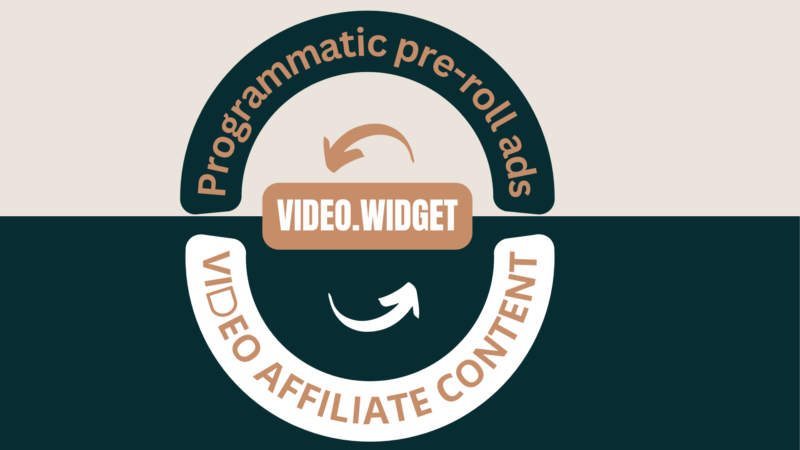
As a publisher, you put one line of code on a single ad unit and gain multiple revenue streams:
- Programmatic video CPM values with an average of 5 euros
- Aggressive commissions of up to 40% from affiliates
- Through various broadcasting forms, perfectly fitting into the widget: pre-rolls, video materials, with posters-overlays and interactive call-to-actions!
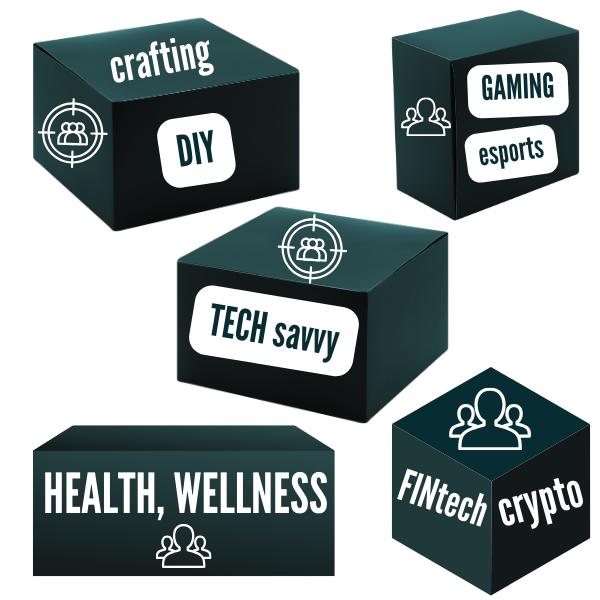
And this cumulative effect happens within a single ad unit. Influencer video marketing is boosting conversions, while on-demand audience boxes with matching audiences are enabling affiliates to reach a larger volume of monetization.
About me
So I established one more network in my life, optimistically named Wellnetwork.
It’s simply an authentic story that, hopefully, you as a marketer or publisher will enjoy.
Growing a network is like growing an avocado—it takes time.
I started solo and am now seeking partners for an idea that can make a change in the digital world and someone’s life.
Jaroslav Sivicki
